2026 Toyota Prius : The Toyota Prius has long been America’s favorite hybrid, and the 2026 model year proves Toyota is taking that title more seriously than ever.
Released under a bold redesign that began with the fifth generation, the 2026 Prius for the U.S. market is no longer just a quietly efficient commuter car; it’s a sleek, tech‑heavy hatchback that blends real performance with best‑in‑class fuel economy.
A Fresh Look, Not Just Another Hybrid
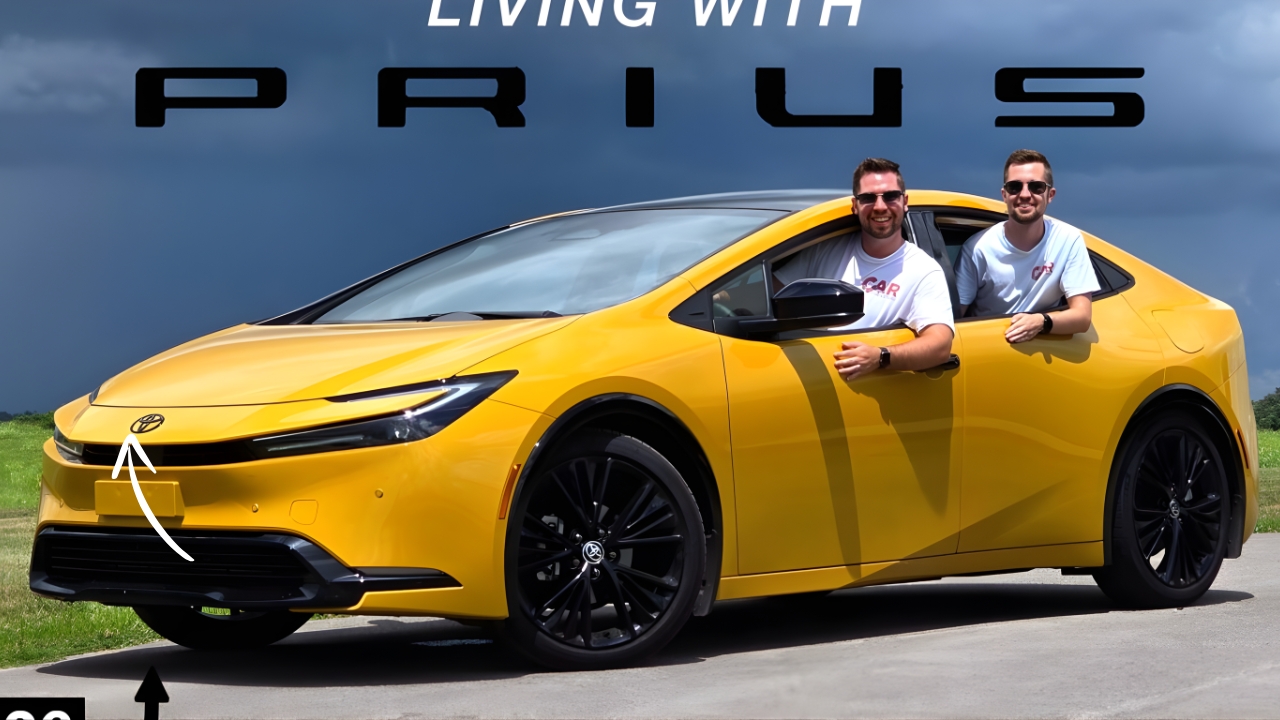
Visually, the 2026 Prius breaks away from the bland eco‑image many people still carry in their minds. Its profile is low and athletic, with a fast‑back roofline, sharp creases along the body, and a wider stance that hints at the available all‑wheel drive system.
From certain angles, it looks closer to a sporty European hatchback than the boxy econo‑box of early‑2000s Prius models.
The front end features a slim, black‑panel grille integrated with thin LED headlights, while the rear uses full‑width lighting elements that give it a cleaner, modern presence on city streets.
Available 19‑inch alloy wheels and color‑shifting paint options such as Karashi (mustard yellow) and Midnight Black Metallic only add to the crossover‑like appeal.
Inside, a minimalist but cleanly laid‑out dashboard centers around a large touchscreen and a digital instrument cluster, with plenty of soft‑touch surfaces and ambient lighting on upper trims.
Powertrain and Performance That Actually Feel Fun
Under the hood, the 2026 Prius relies on Toyota’s fifth‑generation hybrid system paired with a refreshed 2.0‑liter Atkinson‑cycle engine.
Combined output sits around 194–196 horsepower, depending on trim and drivetrain, which is enough to push the Prius from 0–60 mph in roughly 7 seconds, putting it close to many small turbocharged gas cars.
The all‑wheel‑drive version pairs the front‑axle hybrid motor with a smaller electric motor at the rear, enabling confident grip in snow and light off‑pavement conditions without hurting efficiency dramatically.
Drivers can choose between several modes: EV for short‑range electric‑only cruising, ECO for maximum fuel saving, NORMAL for balanced everyday use, and POWER for quicker acceleration and sharper throttle response.
The low center of gravity and reasonably firm suspension make the Prius feel more planted and agile than older iterations, with minimal body roll in highway cloverleafs and confident braking thanks to large, perforated brake discs and regenerative braking integration.
Mileage That Still Defines the Segment
Fuel economy remains the Prius’s strongest weapon against electrified and gas‑only competitors alike.
Front‑wheel‑drive models can hit around 57 mpg combined, with highway figures creeping into the high‑50s, while AWD trims sit a few mpg lower but still well ahead of conventional compact hatchbacks.
The 2026 Prius Plug‑In Hybrid (often marketed as the Prius Prime‑style derivative) pushes the envelope even further, offering up to roughly 40–44 miles of all‑electric driving and combined hybrid economy ratings in the low‑50‑mpg range.
That means for many U.S. commuters, the 2026 Prius can handle an entire workday on electric power alone while still retaining Toyota‑grade range for road trips.
Tech That Feels Current, Not Clunky
Infotainment and connectivity in the 2026 Prius step firmly into modern territory. A centrally mounted touchscreen now comes as standard with wireless Apple CarPlay and Android Auto, while higher trims add built‑in navigation, a premium audio system, and an upgraded user interface that looks and feels closer to what buyers expect in 2026‑era sedans than in an entry‑level hybrid.
Behind the wheel, a configurable digital gauge cluster provides trip info, hybrid‑power‑flow displays, and drive‑mode status without cluttering the view.
Over‑the‑air software updates mean the car keeps improving in small ways over time, a trait more associated with high‑end EVs than with traditional hybrids.
Safety tech is also a highlight: every 2026 Prius includes Toyota Safety Sense 3.0 as standard, with adaptive cruise control, lane‑keeping assist, automatic emergency braking, pedestrian detection, blind spot monitoring, and rear cross‑traffic alert.
Many trims add a 360‑degree camera system and advanced parking assist features, making tight city parking much less stressful.
Pricing, Trim Strategy, and Who It Suits
In the U.S., the 2026 Prius typically starts around the $28,550 mark for the base FWD LE‑style trim, increasing as buyers climb through XLE‑equivalent, Nightshade Edition, Limited AWD, and Plug‑In Hybrid variants.
Compared with compact SUVs and small EVs, that pricing feels competitive for a car that delivers the sort of economy and tax‑friendly credentials many American drivers still value.
Toyota positions the Prius as a one‑car solution for urban and suburban buyers who want low running costs, decent performance, and a clean‑looking but not overly futuristic design.
The Nightshade Edition and plug‑in versions also target enthusiasts who accept hybrids as the practical core of a diversified fleet rather than just a budget‑only option.
2026 Toyota Prius
The 2026 Toyota Prius in the United States is no longer the car people begrudgingly buy for the sake of fuel economy. With sharp styling, genuinely quick acceleration, exceptional MPG, and genuinely modern tech, it represents a clear effort from Toyota to revive the Prius as a lifestyle‑worthy vehicle, not just a fuel‑saver parked at the rental‑car lot.
Also Read this – 2026 Mercedes-AMG G 63 Reveiled updated AI features, luxury sleek design breaks the heart
For Americans weighing hybrids against battery‑electric options, the 2026 Prius stands out as a highly competent, affordable, and quietly exciting choice that actually makes saving gas feel fun.